Thursday, January 5, 2006

significant loss and respected

1943 - 2006


Dubai's ruler dies
Wednesday 04 January 2006, 14:56 Makka Time, 11:56 GMT
english.aljazeera.net/NR/exeres/C822DA21-249B-45CA-81F8-817018F803DA.htm


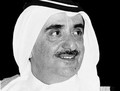
Sheikh Maktoum succeeded his father as ruler of Dubai in 1990

Sheikh Maktoum bin Rashid Al Maktoum, the prime minister and vice-president of the United Arab Emirates, has died.

Sheikh Maktoum, who was also the ruler of the emirate of Dubai, died in Australia on Wednesday. It is thought he had previously suffered from heart problems.

A statment on behalf of Sheikh Khalifa bin Zayed al Nayhan, the president of the UAE, said, "The UAE today lost a historical leader who has contributed throughout his life in establishing the UAE and enhancing its structure and the welfare of its people."

Sheikh Maktoum maintained a low profile during his reign. He left the day-to-day affairs of running Dubai to his younger brothers, particularly Sheikh Mohammed bin Rashid Al Maktoum, the crown prince.

"Pillar"

Anthony Harris, a former British ambassador to the UAE, said, "In his quiet way, Sheikh Maktoum was a pillar of the federation. He was very simple and very wise and was remarkable for an Arab leader because he allowed his younger brothers to have a higher profile."

Sheikh Mohammed, a globally renowned entrepreneur, is expected to be confirmed as his brother's successor as the ruler of the emirate, the Gulf's booming trade and tourism hub.

Internationally, Sheikh Maktoum was perhaps best known as co-owner of Godolphin, the Dubai stables that own some of the world's finest racehorses and compete in all the major races.

He succeeded his father as the emir of Dubai and the prime minister of the UAE after his death in 1990. He also served in the latter role between 1971 and 1979.

He was born in 1943.

Sheikh Maktoum's body will arrive back in Dubai on Thursday morning. Prayers and the funeral will take place in the Za'abel mosque.

Forty days of mourning have been declared, and government offices will close for seven days from Wednesday.
Dubai is entering a new era
Model of political stability continues
Ruler who has clear vision for Dubai
Dubai stands still in silent grief
Nationals mourn loss of beloved leader
Racing mourns Maktoum
Leaders and media express grief
Residents pay tearful farewell
Mohammad to receive mourners
Khalifa and Mohammad condoled
'He gave us hope for tomorrow'
We will never forget him, say residents
Nation bids tearful adieu
Maktoum a down-to-earth man, says national who had chance encounter
Maktoum 'gave full attention to UAE's well-being'
DSF put off as mark of respect
Trading indices hit hard as sombre market closes early
AUB deal will allow $30m to support trade
Remembering Maktoum
'We have lost a great man'
UAE rulers and dignitaries pay tribute
Your tributes to Shaikh Maktoum
Dubai Marathon postponed
Shaikh Maktoum Bin Rashid Al Maktoum dies
Residents lament untimely death
Expats grieve loss of a 'true' friend
Arab diplomats pay homage to a great statesman
Khalifa leads mourning in UAE
Funeral to be held on Thursday
'We will continue his mission of development'
President receives condolence cables
UAE Central Bank orders four-day shutdown
Expat businesses remember the man who said 'welcome'
Business leaders pay tribute
Noble tradition of Maktoum family
Mohammad succeeds Maktoum
Rulers lament loss of a great leader
Omanis sad at death of dynamic leader
Maktoum was 'a modest man with sharp intellect'
'A loss not only to UAE but to Arab and Muslim world'
A man for youth and sport
Business community mourns loss of Maktoum
Timeline: Milestones in the life of Shaikh Maktoum
Racing community pays rich tributes to a man of vision
A major player in UAE formation
Maktoum laid the foundation for a strong and modern nation
Endurance will miss his support dearly
Jaber praises qualities of Maktoum
Nationals stunned as news hits like bolt of lightning
Maktoum's legacy is a modern Dubai
I can still hear his voice
In his words: Shaikh Mohammad Bin Rashid Al Maktoum
'It is thanks to him we were educated and able to get jobs'
'We have lost a great leader and pioneer'
Statesman with a worldwide appeal
Grieving the untimely loss of a leader

Read More...

support boycot israeli products

Norwegian Offical Supports Boycotting Israeli Products
05/01/2006
english.wafa.ps/body.asp?id=5074


OSLO, January 5, 2006, (WAFA)- Norwegian official called Thursday for boycotting the Israeli products, Norwegian media sources said.

The NRK (Norwegian Broadcasting Corporation), said Thursday that the Finance Minister, Kristin Halvorsen, urged Norwegian consumers to boycott Israeli products.

The Norway Post paper said that Halvorsen's Socialist Left Party will begin a solidarity campaign for Palestinians at the end of the month.

Halvorsen says a boycott will visualize the displeasure with Israel's policy towards the Palestinians.

"My goal and that of the Socialist Left Party is that Norwegian consumers will avoid goods and services from Israel and make other choices in the stores," Halvorsen was quoted as saying.

Read More...

caterpillar profits from israel

US Campaign against Caterpillars Sales to Israel
05/01/2006
english.wafa.ps/body.asp?id=5077

WASHINGTON, January 5, 2006, (WAFA)- The US Campaign to End the Israeli Occupation launched a petition protesting against the Caterpillar company for heavy industries.

The campaign published a public petition calling citizens to write for congress members calling them not to accept Caterpillar money.

The campaign said that the Caterpillar profits come from Israel's human rights violations of Palestinians by selling bulldozers to the Israeli army through the Foreign Military Sales (FMS) program.

It added that Israel uses these bulldozers to injure and kill civilians, destroy houses, agriculture, and infrastructure, and build illegal settlements and its illegal Wall in the West Bank.

Such actions contravene the Geneva Conventions, the Universal Declaration of Human Rights, and the recent advisory opinion of the International Court of Justice.

"In addition, it is possible that the sale of Caterpillar equipment to the Israeli army violates the US Arms Export Control Act and US Foreign Assistance Acts," the campaign said.

Since 1998, Caterpillar's political action committee (PAC) has given more than $1 million to candidates for Congress. To find out if and how much money your Members of Congress have received from Caterpillar, according to the campaign.

Read More...

more liberal news

Read More...

good news or bad news

Mixed Arab reactions to Sharon's condition
05-01-2006
www.albawaba.com

There were mixed reactions Thursday in the Arab world towards the critical condition of Israeli Prime Minister Ariel Sharon. Officials from the Palestinian Authority expressed concern for the future of the peace process in Sharon's possible demise. "On a purely humanitarian level we feel sorry for Mr. Sharon," said Palestinian Deputy Prime Minister Nabil Shaath. "Politically it will increase the uncertainty we are facing to get back to the peace process," he said. "It is highly unpredictable to tell what will happen."

Representatives from the offices of Egyptian President Hosni Mubarak and Jordanian King Abdullah II contacted Sharon's office to voice their concern over Sharon's condition and their wishes for his recovery.

However, leaders of Palestinian factions expressed their delight. "We say it frankly that God is great and is able to exact revenge on this butcher. ... We thank God for this gift he presented to us on this new year," Ahmed Jibril, leader of the Syrian-backed faction Popular Front for the Liberation of Palestine-General Command, told the Associated Press. He said Sharon's legacy would be one of huge damage inflicted on the Palestinians.

In Lebanon, Islamic Jihad leader Anwar Abu Taha said, "We are not sorry about his health and let him go to hell whether he lives or dies... we in Islamic Jihad shall continue our holy war until we regain our rights."

Osama Hamdan, a prominent political leader in Hamas, told AP he saw no justification for postponing the Palestinian vote, slated for January 25, because of the political uncertainty in Israel. "On the contrary, it could be an opportunity for the Palestinians to take advantage of the jolt caused by Sharon's absence to conduct an election away from pressures. Sharon out of the picture is a way out for Palestinians to escape the pressures," he said.


Bush faces crisis if Sharon doesn't recover

Read More...

Wednesday, January 4, 2006

liberal news

Read More...

us not happy with nato

US sees coalitions of the willing as best ally
msnbc.msn.com/id/10709916/
Jan. 4, 2006
The Financial Times
Guy Dinmore in Washington


Building on its experience in Iraq, the Bush administration says it wants to be able to form "coalitions of the willing" more efficiently for dealing with future conflicts rather than turning to existing but unreliable institutional alliances such as Nato.

"We 'ad hoc' our way through coalitions of the willing. That's the future," a senior State Department official said in a briefing this week that reflected Washington's search for alternatives to the post-second world war global architecture in the new era of its "war on terror".

Acknowledging that the coalition in Iraq had required the US to "scramble around capitals", he said the Bush administration sought ways of what he called regularising processes and standardising operating procedures and the generation of force requirements.

He did not elaborate and would not say whether such planning was being made with Iran in mind. "We are focused on the enduring dynamics of coalition warfare," the official, who asked not to be named, told reporters late on Tuesday.

Nato would remain a "bedrock alliance, a model and framework", the official said, but he questioned its reliability. He sharply criticised one European government for what he called undermining the alliance by "opting out" of Nato's expansion into possible combat operations in southern Afghanistan.

"Nato has got to look in the mirror as an alliance," he said, asking whether it remained an alliance of "one for all and all for one".

He declined to name the government but observers said he was clearly referring to the Netherlands, which also pulled out its troops from Iraq last year.

The Netherlands has so far been unable to confirm its commitment to send an additional 1,100 soldiers required for a joint British-Canadian-Dutch mission to extend Nato's presence in Afghanistan. Though the Dutch government has made clear it intends to go along with the plans after winning certain "security guarantees" for its troops, it has yet to consult ­parliament, where it could face a hostile reaction.

The US official singled out non-Nato allies in Asia for their support in Iraq, naming Japan, Australia, South Korea and Singapore. He said that at a meeting at Penfolds vineyard in November, Australian officials had told Donald Rumsfeld, the US defence secretary, of their keen interest in expanding intelligence relations with the US.

Condoleezza Rice, the secretary of state, will discuss coalition plans in Iraq with her Australian and Japanese counterparts next week. US officials say with the budget running out, the international community, and notably Japan, will play a leading role in funding reconstruction.

Without the explicit support of the United Nations or Nato, the US went to war with Iraq in March 2003 listing 44 countries in its "coalition of willing", plus unidentified others.

Cliff Kupchan, an analyst with the Eurasia Group consultancy, said the main lesson from Iraq was that the US as the world's only superpower was still not able to achieve its national interests on its own. "The second lesson is that we can't rely on the Europeans. We can only hope on a 50 per cent recovery of that rift," he commented. "So that leaves us with constructing issue-based coalitions of the willing as the key component of future US foreign policy."

The Bush administration says plans by some of allies to reduce troops numbers in Iraq this year are a reflection of progress and a changing mission, not political fatigue with an unpopular war.

Read More...

iran is next threat to us

IRAN IS CHENEY'S NEXT TARGET
It's the financial threat of Iran introducing a euro-based energy exchange.
Allen L Roland, Ph.D
www.uruknet.info/?p=19270&hd=0&size=1&l=x
January 4, 2006


Iran is Cheney's next target ( note , I did not mention Bush who is the cheerleader for the Cheney/Rumsfeld cabal ) and the reason Iran is next has nothing to do with a nuclear threat and everything to do with the financial threat of Iran introducing a euro-based energy exchange.

Stay with me ~ this is high powered global gamesmanship and Ryan McGreal , Raise the Hammer, nails it in this short but most informative expose'.

Excerpt: " One of the major unstated reasons the United States invaded Iraq was to stop Saddam Hussein from trading oil for euros, which he had begun in 2000. Hussein actually made more money selling oil for euros, as the euro appreciated 17 percent against the dollar between 2000 and 2003. Other countries in the region, particulary Iran and Syria, began public musing about switching from dollars to euros around the same time.... All three countries were subject to a barrage of threats from the United States government, but only Iraq went through with the switch, and it was summarily invaded. One of the US government's first acts in Iraq was to switch oil sales back to dollars."

Allen L Roland


Iran in the Crosshairs
By Ryan McGreal
www.raisethehammer.org/index.asp?id=133


08/24/05 "RTH" -- -- Starting in 2006, Iran will start up an "oil bourse", or a stock exchange for trading energy, that will be based on the euro, not the US dollar. While this may seem innocuous, it will be a grave risk to continued American global hegemony.

Petrodollar Hegemony

Today, most oil trading takes place on the New York Mercantile Exchange (NYMEX) and the London-based International Petroleum Exchange (IPE). Since the 1970s, the OPEC countries have all agreed to sell oil for US dollars only. This means every country that wants to buy oil must first acquire enough US dollars to buy what it needs.

Year after year, America imports much more than it exports. It must pay out that difference (its current accounts deficit) in dollars. Last year, the US ran a current accounts deficit of over $600 billion USD; this year, it's expected to increase to $700 billion.

If there were no good reason for other countries to buy all those American dollars, then the dollar would decline in value until the US economy could no longer afford to import goods from abroad. This is what happens when other countries run large current accounts deficits over long periods.

However, the deal with OPEC means other countries have no choice but to buy all those excess American dollars, which props up the value of the dollar and allows the American "import economy" to go on year after year. Effectively, America's main export is US dollars, and it is absolutely imperative to preserve a captive market for those dollars among oil-consuming countries.

The continued viability of the US economy depends on it. Americans can still afford to consume because their economy is suffused with cheap imports; a falling dollar will raise the prices of imported goods. At the same time, Americans enjoy some of the lowest oil prices in the world, largely due to the petrodollar arrangement. This has skewed the American vehicle market toward gas-guzzling but profitable SUVs and light trucks.

Selling Oil for Euros

One of the major unstated reasons the United States invaded Iraq was to stop Saddam Hussein from trading oil for euros, which he had begun in 2000. Hussein actually made more money selling oil for euros, as the euro appreciated 17 percent against the dollar between 2000 and 2003. Other countries in the region, particulary Iran and Syria, began public musing about switching from dollars to euros around the same time.

All three countries were subject to a barrage of threats from the United States government, but only Iraq went through with the switch, and it was summarily invaded. One of the US government's first acts in Iraq was to switch oil sales back to dollars.

Now, Iran plans not just to sell oil for euros, but to create an exchange market for parties to trade oil for euros. The oil bourse will provide a euro-based price standard, the way West Texas Intermediate crude (WTI) and North Sea Brent crude do today. To the extent that the balance of reserve holdings starts to shift from dollars to euros, that's very bad news for America's system of dollar hegemony.

Iran is taking a calculated risk that enough countries have an interest in a petro-euro market to contain American aggression. Many central banks are already quietly shedding their dollar reserves, nervous that America's economic fundamentals ($500 billion federal deficit, $700 billion current accounts deficit, $4.5 billion federal debt, record business and personal debts, zero savings) cannot be sustained for long, and hoping to insulate themselves from what they see as an inevitable recession. The US dollar has declined by a third against the euro since 2000, despite the petrodollar arrangement.

At the same time, Europe is eager to enjoy more of the "virtuous circle" that comes from supplying a major reserve currency: a ready market for its currency and guaranteed reinvestment as euro-holders plant their money in European markets. Vladimir Putin, Russia's president, has also expressed interest in switching from dollars to euros. Russia would benefit from getting paid in a stronger currency, and it would represent a political victory over America after fifteen years of watching its clients and assets in the oil-rich Caspian region co-opted by American expansion.

Nuclear Politics

Iran may, indeed, be attempting to acquire nuclear weapons. However, it also has a "legitimate" interest in developing nuclear power, since its own oil reserves are already post-peak and it aims to continue in its role as an energy exporter. Iran is a signatory in good standing to the Nuclear Non-Proliferation Treaty (NPT) and has openly informed the International Atomic Energy Agency of its intentions as requried by the Treaty.

However, Iran's presumed attempt to acquire nuclear weapons is only the politically acceptable excuse for America's threats. The real danger is that Iran will lay down the foundation for a post-hegemonic international energy industry in which America is merely one of many players. If Iran is, in fact, developing nuclear weapons, it is doing so to acquire a deterrent against exactly this kind of American encroachment.

Indeed, recent world events have only enforced the notion that a nation's successful efforts to acquire nuclear weapons confer respect and status, not the opprobrium it deserves. India, a growing economic power that possesses a nuclear arsenal and refuses to sign either the NPT or the Comprehensive Test Ban Treaty (CTBT), has just been rewarded for its efforts by US President Bush, who has agreed to "work to achieve full civil nuclear energy cooperation with India." This is a straightforward violation of the NPT, which forbids signatories from exchanging nuclear materials or support with non-signatories.

If Iran really is trying to acquire nuclear weapons, is it any wonder why? Look at the advantages that having nuclear arsenals have given to US allies India, Pakistan, and Israel, all of which have benefitted immensely from a playing field tilted in their favour by their ability to project devastating power. As official hysteria about Iran's intentions escalates in volume and intensity, remember the real force undermining the moral authority of the NPT: the big nuclear 'have' countries that still refuse either to apply the ban consistently or to take any meaningful steps of their own toward "general and complete disarmament" - ostensibly the NPT's ultimate goal.

Ironically, America originally invaded Iraq - a poor, defenseless country - partly to send a message to other oil producing countries not to rock the petrodollar system, but the real message for small countries is that they need to present a credible deterrent threat or risk being ignored and/or invaded.

Read More...

middle east cartoon

Read More...

dead miners in us

as i watch the tv news, family members are angry over hearing that family members were alive, only to hear that one survived. was it human error, or was it misleading inappropriate misinformation to give hope? but the families angry and are asking why were they lied to and given false hope.

does it matter if this mis information is in the US regarding a local accident or when the US government plants false stories in international papers regarding the iraq war, or misleads the iraq people.

first report said,
One body has been found in the mine where 13 miners were trapped after an explosion, a Red Cross volunteer tells CNN.


then three hours later,
Despite earlier reports, family members in West Virginia now say only one trapped miner brought out alive. All 12 others dead.

edition.cnn.com/2006/US/01/04/mine.explosion.wed/index.html

Read More...

Tuesday, January 3, 2006

paul martin impressed one

a woman i know was telling me that not long ago, her daughter decided to send a response off to something or other, on the liberal blog which martin's speech writer hosts. her question to martin was something along the line of a first time voter, why she should vote liberal or for the party ect.; as she was trying to make head way of who to vote for and to understand the issues better.

now after reading this, it makes me wonder, was part of this speech about this first time voter who emailed? but that really does not matter. what matters is, he listened and acknowledged these first time voters.


does one speech have that much influence into how this first time vote will vote? it did and will. and as i see it, if that what it takes to give the initiative to vote, so be it. so many young canadians do not vote. often they feel they do not hear their voice, so they do not bother taking the desire to learn the issues.

however, now, her voice was heard. a random act, voiced with a personal tone did make a difference.

one more to the active voters list!

Address by Prime Minister Paul Martin in Winnipeg
January 03, 2006
liberal.ca/news_e.aspx?id=11296

Good morning, and welcome to the federal election campaign, Act II. I hope you enjoyed the intermission. As Sheila says, almost two weeks without a speech from me – you can’t say you didn’t get something nice for Christmas.

But now it’s a new year, a new phase of the campaign, and I’ve got a new speech. Your respite is over.

With three weeks to go until election day, I think it’s fair to say it is only now that most Canadians will be giving this campaign their full attention. During the next number of days, I’ll be presenting elements of our election platform. But today, I want to do something a little different. I want to tell you about an email I received. “I’m voting for the first time,” a young woman wrote. “Tell me why I should vote for you.”

I answered her. But since then, I’ve found myself reflecting on that email – because what she’s asking is really the question that Canadians are asking across our country. They are looking at the parties and the leaders.


They are looking to vote for someone, and for something. They are looking to vote for a vision of Canada that is faithful to their values and the values on which this country was forged.

Today, I want to set the stage for the second half of the campaign by talking about those values – by giving my view of what’s at stake in this election and what it means for Canada. Because therein lies the answer to that young woman’s question – it lies in the values and the beliefs of those who seek to be prime minister.

In doing this, I am going to talk about a number of areas in which my beliefs differ from Stephen Harper’s. I will talk about what I believe a Prime Minister must do and what he must stand for. I will argue that the crucial test of his policies is what they mean for Canadian families – and whether today’s families will be left to try to make their own way, or given real support that will make a meaningful difference to them.

But underlying each of these elements will be the one difference that I believe, more than any other, will guide Canadians in making their choice on January 23rd. And that is the clear difference of values that is illustrated by Stephen Harper’s goal of a fend-for-yourself Canada and my vision of a country in which we strive together as a society toward a common good.

In the first phase of this campaign, I visited a number of schools. I had a chance to talk with students, to answer their questions, to see the look of panic on their faces as I turned the tables and asked questions of them. In these sessions, they never failed to surprise me, to challenge me and to impress me.


I went to Cornwall, Ontario. The day before I arrived, the town’s major employer announced it would be closing down. Canada’s unemployment rate is lower than it’s been since the seventies, but numbers like that don’t matter much when you just found out that your mom or dad has lost their job.

Did I get some questions about the plant closing and the economy? Yes, I did. I got three. Three questions out of 20 or so. For the rest of the time, the students asked largely about international issues, Canada’s place in the world, what we’re doing to help the poor in Africa.

And I found myself thinking: these kids are incredible. They really get it. Even at such a difficult time, they understand what a great country we live in, how fortunate we are, and how our good fortune brings with it a responsibility both to those within our borders and to others in the world. These students are proud when Canada stands on the world stage and leads. They are proud that there is no other country quite like ours.

And they’re right to be proud: We are doing so well as a nation. Together we have overcome challenges that have paralyzed other countries – we no longer borrow to pay our bills; we invest to protect our social programs; we are active in the world, helping to keep the peace in troubled lands; we speak with an independent voice all our own; and we have built a society in which newcomers feel welcome. Look around the world. You begin to understand what an achievement that is. Something to be proud of.

And so you can imagine how jarring it can be to sit the House of Commons and listen to what’s said there. Since I’ve become Prime Minister, I have stared across the floor at one party – the Bloc – that seeks to divide our remarkable country. And at another, the Conservatives, whose leader and whose members seem chronically unhappy and for whom pessimism has become the default approach to seemingly every issue.

Having heard the Bloc try so often to pose as the defender of Québec’s interests, some Quebecers might be tempted to think, 15 years later, that this is the purpose of this party.

But it’s not. We must never forget that the Bloc’s only true goal is the separation of Quebec. Nothing else.

If you support the Bloc, on the night of January 23rd Gilles Duceppe will grab hold of your ballot. He will wave it high. He will claim that, by voting for him, you have given him the mandate to seal his pact with André Boisclair and begin the process leading to a third referendum.

The Bloc is stuck in the past. It does not accept the fact that Québec has evolved.

Look at Quebec today. It is enterprising and united. It is innovative and creative. It is progressive and generous. It is confident and open to the world.

The Bloc wants to isolate Quebec from Canada at the very moment when the new global reality demands that we pool all of our strengths. Our competitors are not within our own borders, they are outside of them.

What I want is a Quebec that succeeds everywhere in the world because of its place within Canada, and a Canada that succeeds thanks to a strong and confident Quebec.

We Canadians have everything we need to succeed, to succeed beyond our imagination. But success won’t be served to us on a platter. We must unite our efforts and take advantage of our assets. Canada has everything to succeed. It would be foolish to divide ourselves.

The presence of francophones here in Manitoba and across Canada, their attachment to their language and their culture and Quebec’s determination to assert its particular identity from early on have prompted Canada, from the very beginning of its history, to deal with difference in a constructive way.

It is this experience which has led to Canada becoming a unique country. It is this experience which distinguishes us from other countries, such as the United States. And it is this experience which will make us say no to the Bloc and no to separation come January 23rd.

And then there are the Conservatives. On January 23rd, Canadians will elect one of two people as Prime Minister. I have listened to Stephen Harper speak on a number of occasions in the House. I’ve heard what he’s said on the campaign trail. I don’t think Canadians could ask for a choice between two leaders who are more different.

I see Canada as a success, a nation with tremendous potential, but Mr. Harper speaks to what he views as its failings. I see a Canada I’m proud of, a nation I believe to be a model to the world, but Mr. Harper speaks of how our country comes up short in his eyes. I see a Canada we can build on, improve on, move forward -- but he speaks of moving in a different direction, away from all we have achieved together and toward a very different country.

Mr. Harper has made a promise a day since this campaign began. Five promises, then ten, now more than 20. And more to come. In the details of his promise a day, in the words he speaks now, and in the words he has used to describe Canada, such as when called our country a “Northern European welfare state in the worst sense of the term,” we see the roadmap Stephen Harper would follow to arrive at his idea of Canada.

That’s why I say that the choice before Canadians is clear. I believe in moving forward, not in fighting old debates. I believe in pursuing change, but change that builds on all we have accomplished together, not change that would turn away from it.

I believe in respecting the Charter of Rights, not subjecting the fundamental freedoms of Canadians to the whims of the governing party. I believe in speaking on the world stage with an independent voice. I believe that working with the First Nations, the Metis Nation, the Inuit, we can profoundly and permanently improve the lives of Aboriginal Canadians. And I believe in making sure that responsible economic management remains a cornerstone of government.

Think about it: For three decades, our budget was chronically in deficit. We solved the problem. Eight straight balanced budgets in a row. Our public pension plan was at risk. We solved the problem. Now it will be there for generations to come. Our unemployment rate was in the double digits. Today, unemployment is at its lowest level in more than 30 years.

I believe in protecting our prosperity for generations to come. We’re doing that by paying down our national debt every year. And I believe in supporting today’s families. We’re doing that by cutting personal income taxes, so you keep more money in your pocket. Mr. Harper speaks of tax cuts, too, but his would extend the greatest benefit to the richest among us with the most to spend.

We’re supporting families with a plan for safer communities. Mr. Harper thinks there is only one solution to the scourge of gun violence – more punishment. We agree that’s part of the answer -- that’s why we believe in tough action to punish gun crime, including increasing mandatory minimum sentences. And that’s why we support what’s called reverse-onus bail – which places on those charged with gun crimes the burden of convincing a judge they won’t be a risk to others.

But we also believe that government has the duty to keep families whole by preventing gun crime. We will do that by banning handguns and by increasing enforcement at the border to stop gun smuggling. We will do that by creating a new, elite squad of the RCMP – to partner with local law enforcement to combat guns, gangs and drugs and keep our streets safe.

And perhaps most importantly, we will do it by working with community leaders to give hope to young people who so desperately seek it. When you talk to them, it is the sense of exclusion, the sense that opportunities provided to others will never be provided to them, that they identify as a root cause of the void too many seek to fill by turning to violence. We must fill that void by giving back to the young the hope they were born with.

Continuing on, we are supporting Canadian families by building this generation’s legacy to the next: a national program of early learning and child care, so that Canadian children – regardless of family income – can enter school ready to learn and leave school ready to succeed. We’ve signed agreements with all 10 provinces. We’ve committed funding over a decade to make sure the program becomes permanent. We’re creating child care spaces right across the country to give parents real choice.

And what would Mr. Harper do? He would pull the plug on all that. He would renege. He would terminate our agreements with the provinces. He would deny Canadians the first new social program in a generation. And what would he offer instead? $25 a week, per family, per child.

Now, that money would do some good. But here’s what I believe: I believe that in the real world, you cannot cut a cheque for $25 a week and call it a child care strategy. It’s not a strategy. It’s not a solution. It does little to help those parents with children in child care. It does nothing to help those who have trouble finding quality, affordable care for their children.

Think about it this way: What if decades ago, Tommy Douglas and my father and Lester Pearson had considered the idea of medicare and then said – forget it, let’s just give people 25 bucks a week.

It won’t help much if you get sick, but we’ll call it a strategy. We’ll call it a solution. Heck, we’ll call it medicare.

You want a fundamental difference between Mr. Harper and myself? Well, this is it.

I believe that social policy, the things we do to help each other out and help each other up, is a window on the kind of country we are, and the kind of country we want to be. I believe we give ourselves the best chance to succeed as a nation when we rally behind the conviction that we must leave no one behind.

But achieving that goal requires national leadership. It requires a prime minister who believes not in a fend-for-yourself society, but in naming a destination down the road and doing what it takes to ensure we get there together. Because it’s that faith – the faith that we are stronger together than we are alone – that has come to define the Canadian way and has led to so many of our shared achievements.

It’s a question of values – everyone for him or herself, or everyone coming together, standing side by side for the common good, for the betterment of all. I believe that the Canadian way is the way of fairness and generosity. It’s an approach that has produced the best country and the strongest economy in the world. As Prime Minister, I will work and fight to preserve it.

When you think about it in these terms, you understand that it matters who Canadians choose to be Prime Minister, and what that person believes.

Mr. Harper and I differ on child care and gun crimes, on tax cuts and foreign affairs. We differ on issues across the full spectrum of policy. And we have differences in matters far more elemental than that.

A decade ago, when he was a Reform MP, Mr. Harper said the following: “Whether Canada ends up as one national government, or two national governments, or several national governments or some other kind of arrangement is, quite frankly, secondary in my opinion.”

Well, it’s never been secondary in my opinion. It’s never been secondary to the values or the beliefs of most Canadians. This is something that most of us feel at the very core of our being.

One Canada. Not two. Not several. One national government to unite us as Canadians. One national government to speak for us as Canadians. One Prime Minister to represent us as Canadians. Not two. Not several.


Canada needs a prime minister who will fight for what’s best for all of Canada, who is dedicated to standing against those who would divide us, who is dedicated to passing on a strong and united Canada for the generations to come. A Prime Minister who understands that almost 150 years ago, the people of our country took a decision that we would be stronger if we pulled together rather than if we pull apart. A Prime Minister who understands and believes that’s still true today.

And so to that young woman voting for the first time, to you and to all Canadians, I say this: As Prime Minister I will defend the Canada we have built together – defend its hard-won prosperity by staying out of deficit, defend its place in the world by speaking with an independent voice, defend its unity by standing against the separatists, defend its belief in fairness by protecting our social programs.

My party and I – we will deliver what no other party can, because we believe what no other party does. We will deliver the biggest tax cuts, the first new social program in a generation – child care – and the best plan for safer, healthier communities. As the only truly national party, we will protect our unity with strong voices from Quebec. We will support Canadian families. We will defend Canadian values.

Together, over years and decades of challenge, we have made Canada strong, a nation to be proud of, a country we think of a model to the world. Together, in the years to come, we can make Canada even stronger.

Of course there are challenges that confront us as a nation, and there will be more -- but when haven’t there been, and when haven’t we overcome them? That’s the story of Canada. That’s what we can achieve by working together. It’s what we can achieve with national leadership – with a prime minister who believes in the good that government can do.

I believe our country is worth celebrating. Not the Canada of some distant future. But the Canada of today. It’s worth celebrating. It’s worth protecting. It’s worth building on.

There is such potential in our nation, such promise in the years ahead. Together, we will fulfill that potential. Together, we will achieve that promise.

Thank you.

Read More...

which disaster is worse

13 W.Va. miners trapped by blast; rescue team sent
By Vicki Smith
ASSOCIATED PRESS
January 3, 2006

Rescuers entered a coal mine last night after waiting almost 12 hours for dangerous gases to clear, following an explosion that trapped 13 miners underground.

or

U.S. used chemical weapons in Fallujah- Documentary
11/8/2005

PMItalian TV broadcast a documentary which showed evidence that U.S. forces used phosphorus bombs against Iraqi civilians during the 2004 offensive on Fallujah.

Read More...

vote for harper, think not

Harper Hypocrisy on Accountability
January 03, 2006
liberal.ca/news_e.aspx?id=11298

Conservative leader Stephen Harper claims he now wants to improve accountability in government but his public record reveals this is nothing more than political double-speak:

  • Stephen Harper opposed amendments to strengthen the Lobbyist Registry (Bill C-15, Lobbyists Registration Amendment Act).
  • He voted against the Ethics Bill which created an independent Ethics Commissioner (Bill C-4, Parliament of Canada Amendment Act [Ethics Commissioner and Senate Ethics Officer]).
  • He opposed the political financing bill that put tight limits on corporate and union donations and strengthened donation disclosure rules (Bill C-24, Canada Elections Amendment Act [Political Financing]).
  • He has opposed all efforts to put limits on the influence of third-party advertising during election campaigns, even fighting the issue at the Supreme Court as president of the National Citizens Coalition. Mr. Harper said he will repeal these rules if he becomes Prime Minister.
  • Mr. Harper has opposed a recent government initiative to require third party groups that advertise during elections to reveal the identity of their donors.
  • He has repeatedly refused to reveal who bank-rolled his 2002 campaign to become leader of the Canadian Alliance.
  • He has refused to reveal exactly how much was paid to Ezra Levant in 2002 to get him to step aside from the Calgary Southwest nomination so he could run in a by-election.
  • Mr. Harper has refused to make his deputy leader, Peter Mackay, reveal the identity of the single donor who paid off his $500,000 leadership debt
  • Mr. Harper appointed as a Defence Critic Gordon O’Connor, a man who has acted as a lobbyist for the defence industry for seven years.
  • Today Mr. Harper pointed to the record of Brian Mulroney and suggested he will use Mr. Mulroney as his standard of ethics.

Mr. Harper’s spotty record on ethics contrast with the reforms Prime Minister Paul Martin has brought in over the last 18 months.

Procurement

In her February 10, 2004 report, Auditor General Shelia Fraser said, “Our review of a sample of standing offers found that the competitive process had been followed in pre-qualifying suppliers. Requests for proposals were issued, and the selection process resulted in standing offer agreements with the successful bidders. We note that the vast majority of these suppliers were not the same as those providing sponsorship or advertising services.”

She concluded “For the most part, we found that the federal government was managing public opinion research in a transparent manner and with adequate controls. The activities were centrally co-ordinated, as required by policies. Selection of suppliers for standing offers followed the competitive process. However, PWGSC needs to improve its management of standing offers and call-ups for public opinion research in order to be consistent with the rules in place.”

Under Paul Martin’s leadership this government has taken dramatic steps to ensure our methods of procurement are fair, competitive, and transparent – and that government contracts produce good value for taxpayer dollars.

A Code of Fair Contract Practices – an integrity pact – is being put in place to ground our relationships with suppliers in a culture of integrity.

We have changed the way we award advertising contracts, acting on recommendations from an internal audit as well as the Auditor General. To increase competition, value-for-money and overall transparency:

In of the spring of 2004 we hired a new Agency of Record for media placement. This contract was awarded through a rigorous and competitive open-bidding process.

We have established a completely new group of pre-qualified advertising suppliers through the same transparent process.

Since 2003 we have published a detailed annual report of all advertising activity. On a quarterly basis we report on departmental advertising contracts.

We have strengthened rules around public opinion research (POR) – even though he Auditor General observed in her 2004 report that these activities were “well managed” with “roles and responsibilities clearly defined.”

To further advance our government’s commitment to value, transparency and good stewardship of taxpayer funds:

New Standing Offers were established through competitive bidding in May 2004 – these will be renewed in the spring of 2006.

Our first annual report on POR activities was published in October 2004.

We’ve undertaken a review of how we purchase syndicated studies – seeking best value for taxpayers’ dollars.

Transparency

Since April 2004 all travel and hospitality expenses – of Ministers, Ministers of State, Parliamentary Secretaries and their political staff, and other senior government officials – have been posted online on a quarterly basis.

Government contracts worth more than $10,000 are also posted online.

The government is reviewing the possibility of publicly reporting on cases of public sector misconduct – in a manner consonant with individual privacy and the law.

This government has embraced transparency in key appointments:

Through our Action Plan for Democratic Reform Parliamentary committees have been empowered to review the appointments of the heads of Crown corporations.

We have reformed the process of appointing members to the Immigration and Refugee Board to promote fairness and efficiency.

We have brought increased transparency to the selection of Supreme Court Justices.

This government is committed to expanding Access to Information:

The Access to Information Act has been extended to 10 key Crown corporations that were previously exempt.

The government has presented a discussion paper to Parliament which proposes, among other measures, that the Access to Information Act be expanded to several federal institutions that are currently exempt.

Ethics & Audits

From his first day in office, Prime Minister Paul Martin has reformed government so that everyone in the public service – everyone – will be held to account. This government has:

Re-established the office of the Comptroller General of Canada;

Strengthened ethical guidelines for ministers and other public office holders and established an independent Ethics Commissioner for the House of Commons – while moving to have Members of Parliament adopt their own Conflict of Interest Code;

Introduced a new, publicly posted recusal process for Members of Cabinet, including the Prime Minister;

Put forward legislation to encourage ”whistleblowers” and to protect them from reprisal.

The Government also strengthened audit practice in the public sector through a comprehensive, ongoing initiative that includes the new Policy on Internal Audit – it will:

Increase the independence of the internal audit function through the creation of truly independent internal audit committees and of a Chief Audit Executive position in each department and agency;

Enhance oversight, monitoring and reporting by establishing annual reports from Chief Audit Executives and the Comptroller General of Canada, whose oversight extends to the overall state of controls and processes across the federal government;

Strengthen and further professionalize the internal audit function throughout the government through higher professional standards, recruitment of additional skilled professionals; training; and assessments.

Read More...

us air strike kills family

Iraq official: US air strike kills family
Tuesday 03 January 2006, 14:16 Makka Time, 11:16 GMT

A US air attack has killed 14 members of one family in the oil-refining town of Baiji in northern Iraq. An Iraqi security force spokesman for the Joint Coordination Centre, which handles information and is a liaison between US and Iraqi forces, said that the Tuesday air raid destroyed one house, killing the people inside.
news article here

Read More...

middle east cartoon

Read More...

Monday, January 2, 2006

impeach the son of a bitch

Time to impeach a President
By DOUG THOMPSON
Jan 2, 2006, 08:26
www.capitolhillblue.com/artman/publish/article_7935.shtml

I’ve always felt impeachment is the nuclear option of politics; a drastic action we call in after all else fails. That’s why I’ve been reluctant to call for the impeachment of President George W. Bush.

No longer. The reckless, arrogant actions of the man leave me with no choice but to consider that final solution.

Time to impeach the son of a bitch.

I don’t come to this conclusion lightly. Impeachment is a divisive process that all too often tears the country apart. Only two Presidents have actually been brought to trial before Congress under the impeachment process: Andrew Johnson and Bill Clinton. Both were impeached more for political dislike than actual crimes against the Constitution.

Richard Nixon resigned from office after the joint Congressional committee investigating Watergate voted to recommend impeachment and avoided, in all likelihood, becoming the first President to be both impeached and convicted. Resignation was a rare, honorable moment in Nixon’s tattered political career.

But we cannot expect such honor from George W. Bush. Honor is not part of his modus operandi, as absent as honesty in a career marked by lies, corruption and abuse of the public trust.

Bush’s arrogance by continuing his illegal spying on Americans by the federal government is just his latest high crime against the Constitution, a document which he blithely dismisses as "just a goddamned piece of paper."

At the very least, Bush is a reckless, irresponsible leader, one who led this nation to invade another country in a war based on fabricated reasons, a man who has sent more than 2,000 Americans and countless Iraqi civilians to their deaths while hiding behind a rationale based on a lie.

At worst, he is a war criminal, a power-crazed despot who could go down in history as a mass murderer. History will determine the final legacy of George W. Bush and I doubt seriously that history will be kind to a political figure of his ilk.

I’m not here to deal with the possibilities of the future but instead with the realities of now and that requires swift, decisive action against a dictatorial madman who threatens all of our futures.

Six months ago, when the Downing Street Memo surfaced, I said Bush should be impeached if it was true. I later backed off. I was wrong. He needs to go.

I’m not sure America can survive three more years with Bush driving the ship of state. I’m not sure we can survive three more years of corrupt control of Congress by a party that circles the wagons to protect criminals like Tom DeLay and then drops its collective trousers, grabs its ankles and allows itself to be gleefully screwed by fatcat lobbyists and cash-rich special interest groups.

I’m not sure we can wait for the electorate to take action because the electorate has been pretty damn dumb and stupid for too long and given us too many miscreants living in the White House and wandering the halls of Congress.

Let’s start the New Year by impeaching the criminal at the top of this corrupt pyramid scheme and then work our way down through the sordid pile. Indict Vice President Dick Cheney for bribes he paid and the money he laundered while Chairman of Halliburton. Send Senate Majority Leader Bill Frist to prison for insider trading. Put former House Majority Leader Tom DeLay under the jail.

Time to send a message to the cabal of greed and corruption that has taken over our government and tell them that their ass is grass and we’ve got a bunch of lawn mowers fully gassed and ready to start cutting.

Read More...

vote liberal

Vote Liberal


Vote Will Hansma
Liberal Candidate for the Okanagan-Shuswap
http://www.hansma.ca/

Read More...

harper's gun rhetoric

Harper Wrong on Guns and Mandatory Minimums
January 02, 2006
liberal.ca/news_e.aspx?id=11293

Stephen Harper today claimed that the government is not addressing gun crime.

“This was a government that in the days leading to this campaign was literally ridiculing the idea of mandatory minimum sentences and now they're out there talking about, you know, keeping people in jail, tougher bail, even before people have been convicted,” Mr. Harper told reporters in Ottawa.

THE FACTS

Mr. Harper has a selective memory. By forcing the election, the Conservatives killed legislation (Bill C-82) that would have strengthened law enforcement in Canada. The lost bill would have:

doubled mandatory minimum penalties for firearms smuggling, trafficking and the illegal possession of loaded handguns in public places;

created two new offences of break and enter to steal a firearm and robbery where a firearm has been stolen; and

expanded the use of firearm prohibition orders to establish Lifetime weapons prohibition orders to be extended to all classes of firearms for those convicted of serious violent offences, including manslaughter, sexual assault and robbery, among others, when committed with a firearm.

When the Liberal government brought in an earlier Bill (C-41) that established mandatory minimums for gun crimes Harper and his colleagues voted against the legislation.

Harper has spent his career fighting gun control.

Read More...

harper doesn't get it

Harper’s Five Priorities Miss the Mark
January 02, 2006
liberal.ca/news_e.aspx?id=11295


Conservative leader Stephen Harper’s five main priorities miss the mark when it come to lining up with the priorities of Canadians.

Mr. Harper identified government accountability, reducing the GST, strengthening the justice system, a child care allowance, solving the “fiscal imbalance” and waiting times for patients as his key priorities in a speech on January 2.

A closer look shows that Mr. Harper’s approach to each of these issues misses the mark when it comes to what Canadians’ priorities.

Mr. Harper claims he wants improve government accountability, but his plan has huge loopholes. If he really cares about accountability:

Why won’t he tell Canadians who bankrolled his 2002 leadership campaign?

Why will he not support our government’s efforts to limit the influence of big-money lobby groups like the National Citizens’ Coalition on Canadian elections, and make these lobby groups reveal who is funding their campaigns?

Mr. Harper’s behaviour is clearly not that of a leader who truly values accountability.

On taxes, the Conservative leader claims his plan to cut the GST is progressive. However, unlike the Liberal government’s personal income tax cuts, the people who will benefit the most under the Conservative plan are those with large disposable incomes. Under Mr. Harper’s tax cut plan, you would save:

four cents on a hamburger, but 10 times that if you can afford steak and lobster;
less than a quarter on a Timex, but $50 on a Rolex;
$250 on a new Grand Prix, but nearly $1,000 on a luxury Lexus.

On justice issues, the Conservative leader claims he wants to address gun crime, but his public record says something quite different. Mr. Harper has spent his entire career fighting gun control, including the 1991 restrictions brought in by the Mulroney government. He and his colleagues voted against every single gun control measure brought in by the Liberal government over the last 12 years.

Most recently, Mr. Harper helped precipitate an early election that derailed Bill C-82 which includes new gun crime offences and will double mandatory minimums. Now Mr. Harper is refusing to support the Liberal government’s proposed Canada Handgun Ban. He continues to be out of step with the priorities of Canadians when it comes to justice and community safety.

Mr. Harper says that child care is another one of his priorities. However, he has also said he will renege on the five-year child care agreements signed with the provinces. Mr. Harper’s proposal to give families less than $25 a week, or about $4 a day after taxes, will pay for only three days of child care a month in most provinces. Unlike the Liberal plan, Mr. Harper’s will do nothing to create new facilities that are safe and employ well-trained educators. What Mr. Harper doesn’t understand is that Canadians expect more from the government than a coupon for our kids.

Mr. Harper also promises “medically acceptable waiting times” for Canadians, but his plan allocates no money to improving the system – either in new transfers to the provinces or new direct federal spending. The Conservative leader has a record of supporting expanding private health care, not strengthening the public system. His efforts to bring down the government last spring nearly blocked implementation of the $41 billion federal-provincial heath care deal that Prime Minister Martin negotiated with the provinces and territories.

On solving the “fiscal imbalance,” Mr. Harper refuses to say what he plans to do or put a price tag on this promise which, at its core, is about reducing the role of the Government of Canada and transferring tax points to the provinces. Harper knows that a tax point transfer will mean much more to wealthier provinces than those with a smaller tax base, but he doesn’t seem to care that his plan will exacerbate regional disparities.

It was also interesting to note what priorities did not make Harper’s list: no mention of the economy, education, the environment, seniors, foreign policy, agriculture, softwood, regional development, support for cities and communities, national unity, or protection of minority rights.

Read More...

colin mayes was his name

vote liberal!
http://liberal.ca/default_e.aspx

vote will hansma
http://www.hansma.ca/


now what a conservative joke ...

Harper stumbles on surprise visit (Video)
CHBC Web posted on Thursday, 29 December 2005

Conservative leader Stephen Harper detours to the Okanagan, where he forgets a local candidate’s name.


if any of you didn't know his name, it was colin mayes / okanagan shuswap riding.

Read More...

israel is a mirror of the us

British TV program uncovers Israel’s secret nuclear plans
1/2/2006 9:00:00


PM Dubbed “Israel’s secret weapons”, the program mainly focuses on the international community’s double standards in dealing with Israel’s unconventional weapons.

Read More...

human or natural disaster

i read this article, and if nothing else, i hope these and many other people can have great appreciation for many civilians in iraq.

WILDFIRES CLAIM TWO TEXAS TOWNS
Mon, 02 Jan 2006
cbc.ca/story/world/national/2006/01/02/060102-usfires.html

Wildfires across the dry southern U.S. prairie have destroyed two small
towns in Texas and burnt homes in Oklahoma City.

yet one of many over the course, did they deserve this ...

Iraqi: "Americans Bombed Everything, Our Houses Are Destroyed"
Monday, November 7th, 2005
democracynow.org/article.pl?sid=05/11/07/1438205

Iraqi: "Americans Bombed Everything, Our Houses Are Destroyed"Most communication to the Sunni towns of Husaybah and Qaim has been cut off. An Iraqi journalist in Husaybah told Al-Jazeera "The city is suffering a complete lack of all of life's basic necessities. There is no fuel and winter is upon us. There is no food and there are no services whatsoever, not even health services." The journalist said that ambulances have been unable to respond to emergencies because no movement is allowed in the city. "They destroyed Qaim, Americans bombed everything, our houses are destroyed, our children are victims and we want a solution," one resident told Reuters. "What do we have to do? We need a solution." Residents have been forced to flee the town on foot. The Associated Press reported that the U.S.-led forces warned over loudspeakers that anyone leaving the town in vehicles would be shot. The U.S. said Operation Steel Curtain was needed to stop foreign fighters from crossing the Syrian border. Meanwhile Sunni politicians criticized the U.S.-led attack. The head of the moderate Iraqi Islamic Party Mohsen Abdul-Hamid said "We reject all military operations directed against civilian targets because such acts lead to the killing of innocent people and the destruction of towns and cities."


and if you dare, perhaps really go through all the photo's shown in the gallery of : Images by 'Dahr Jamail's Iraq Dispatches'

Read More...

aljazeera harassed by us

Aljazeera crew freed after Kabul arrest
english.aljazeera.net/NR/exeres/851C5B58-2787-48BF-9FC8-92E30CFECFF1.htm
Monday 02 January 2006, 5:33 Makka Time, 2:33 GMT


The arrests took place in the capital, Kabul, on Sunday

Afghan police have released three Aljazeera employees in Kabul after holding them for hours, following their arrest by US forces earlier.

Wali Allah Shahin, Aljazeera's correspondent in Kabul, along with driver Mahmood Agha and cameraman Nasir Hashimi, were released on Sunday.

US forces had earlier apprehended the three, confiscated their equipment and handed them over to the Afghan police. The US military said the trio were taking pictures of places marked as security zones around the coalition forces' headquarters.

Lieutenant Mike Cody, a US military spokesman, said security forces on contract with US-led forces detained the trio, took control of their equipment and passed them on to the Afghan police.

He said the men were held after they were seen "filming security features in the vicinity of Camp Eggers in Kabul".

Civilian area

But Samir Allawi, Aljazeera's Kabul bureau chief, said the team was merely following up on the Afghan government's plan to remove all illegal cement barriers blocking 48 Kabul roads, causing traffic problems.

Allawi said the Afghan government was removing cement blocks near the US military headquarters.

"This area is purely civilian where there was nothing to indicate that taking pictures was prohibited. The team then began to set their filming equipment when the US embassy guards came, apprehended them and took them to the US military command for questioning," Allawi said. The three were taken for questioning and were only released after signing an affidavit that they would not violate the law. "Then we contacted the Afghani Interior Ministry and we were clearly told that what the team had done did not constitute a violation of the law.

"That was also confirmed by the police officer who escorted our colleagues. Nevertheless, the US forces seized the team's mobile phones and cameras and cancelled the press card of our colleague, Wali Allah Shahin," Allawi said.

Read More...

colin mayes sued

really, would you vote for colin mayes, given:

Former mayor sued
CHBC Web posted on Monday, 05 December 2005
www.chbc.com/index.php?name=News&file=article&sid=12120


The former mayor of Salmon Arm, who resigned to run for the Conservative party in the federal election, is being sued for libel and defamation. Colin Mayes wrote a letter that was published in the Lakeshore News newspaper. It was in response to allegations Greg Husband made during his unsuccessful campaign for the mayor's job about the city's financial affairs and the circumstances surrounding the building of a new city hall and court house in Salmon Arm. Husband says after consulting a lawyer, legal action is the only way he can clear his name in the community. His lawsuit also names the newspaper and its publisher, alleging the headline to the letter was defamatory.

Read More...

Sunday, January 1, 2006

they want our water

Pressure to export water to U.S. could grow
Sun. Jan. 1 2006 11:27 PM ET
ctv.ca/servlet/ArticleNews/story/CTVNews/20060101/export_water_060101/20060101?hub=Canada

Canadian Press

OTTAWA —
There was an edge of frustration in Paul Cellucci's voice when he raised the topic of fresh water exports in a radio interview last month.

"Canada has probably one of the largest resources of fresh water in the world," the former U.S. ambassador said during a debate on Canada-U.S. relations.

"Water is going to be - already is - a very valuable commodity and I've always found it odd where Canada is so willing to sell oil and natural gas and uranium and coal, which are by their very nature finite. But talking about water is off the table, and water is renewable.

"It doesn't make any sense to me."

It was as close as any high-profile American has come recently to saying what many Canadians have long suspected - Washington wants our water.

Officially, the U.S. government says it's not interested in Canadian water. But many believe the issue will soon break into the open.

Maclean's magazine recently ran a cover story arguing that Canada should sell its water "before they take it."

"This country is in a position to provide a solution that would yield enormous economic and humanitarian benefits for the entire continent, even the world," the magazine wrote. Such viewpoints don't sit well with Peter Lougheed, the former premier of Alberta.

In a recent speech to the Calgary Chamber of Commerce, Lougheed called for an all-party declaration in the House of Commons confirming Canada's refusal to allow large-scale water transfers to its southern neighbour.

"We should not export our fresh water - we need it and we should conserve it," Lougheed said. "And we should communicate to the United States very quickly how firm we are about it."

U.S. water shortages are becoming critical. Flow in the Colorado River, which feeds the Las Vegas Valley, dropped by almost half between 2000 and 2005 due to successive droughts. Yet Canada has major water problems of its own.

The International Joint Commission has repeatedly warned about declining water quality in the Great Lakes due to toxic contamination, and water levels in the lakes have dropped to record lows.

"Although the Great Lakes contain about 20 per cent of the fresh water on the Earth's surface, only one per cent of this water is renewed each year," the commission noted in a recent report.

Ontario, Quebec and eight states signed a deal earlier this month that will prevent thirsty jurisdictions in the southern U.S. from getting access to water from the Great Lakes.

But critics have said the deal still allows for water to be withdrawn at unacceptable levels.

The biggest threat, though, hangs over Western Canada. The most important rivers in the Prairies are fed by mountain glaciers, and the glaciers are melting due to climate change.

"The consequences of these hydrological changes for water availability . . . are likely to be severe," said a study published last month in the British science journal, Nature.

Cities like Calgary, Edmonton and Saskatoon are at risk of literally losing the rivers on which they are built over the next generation or two.

"It's a huge problem," says Andrew Weaver of the School of Earth and Ocean Sciences at the University of Victoria. "These glaciers are basically toast. They won't be around by the end of the century, or they'll be around in such insignificant amounts that it won't be a big source of water. You've got to start thinking about adaptation here."

The shrinkage of the glaciers is well-documented. Visitors to Glacier National Park in Alberta can follow the retreat of the Athabasca Glacier over the past century by visiting the cairns that used to mark the toe of the glacier.

"That's fossil water and when it's gone, it's gone," said Tim Barnett of the Scripps Institution of Oceanography at La Jolla, California, lead author of the article in Nature. "If you really are glacier-fed in a warming world, you're up the creek without a paddle, no pun intended."

Maude Barlow, chairwoman of the Council of Canadians, argues that a global shortage of water will be the most threatening ecological, economic and political crisis in the 21st century. But she says Canada's apparent abundance of blue gold is illusory.

"There is no water to spare in the Great Lakes. The only place one could go for the kind of massive water they're talking about is up north and all those rivers are flowing north, so you'd have to be undertaking huge engineering projects to reverse the flow of water.

"So this notion that we have lots of water sitting around is absolutely false."

Barlow says the federal government can't legally ban bulk water exports because water is included in NAFTA. Ottawa has banned inter-basin transfers but she questions whether the ban could be enforced against a provincial government determined to export.

She rejects the suggestion that Canada would be doing a service to the world by sharing its water: "I think it would end up going to places that can buy it as opposed to places that need it."

Despite evidence that water is being wasted on a massive scale, municipalities still don't charge residents the real cost of water or effectively promote conservation.

Due to budget cuts in recent years, the federal government has cut back on water research, closing monitoring stations and reducing data collection on water supplies. The underground aquifers that store the nation's groundwater haven't been mapped, so there is no way to know if they are being depleted or contaminated.

"As a society we are largely forging ahead blindly when it comes to our management of water," the Senate environment committee said in a report tabled just before the government fell on Nov. 28. "We are in essence gambling with our most precious but often under-appreciated natural resource."

The committee recommended that Ottawa create a National Water Council to develop strategies on key water issues. But its report went virtually unnoticed amid the excitement of the election call.

Read More...

new years resolutions

It is believed that the Babylonians were the first to make New Year's resolutions, and people all over the world have been breaking them ever since. The early Christians believed the first day of the new year should be spent reflecting on past mistakes and resolving to improve oneself in the new year.

Read More...

new years day history

The celebration of the new year on January 1st is a relatively new phenomenon. The earliest recording of a new year celebration is believed to have been in Mesopotamia, c. 2000 B.C. and was celebrated around the time of the vernal equinox, in mid-March. A variety of other dates tied to the seasons were also used by various ancient cultures. The Egyptians, Phoenicians, and Persians began their new year with the fall equinox, and the Greeks celebrated it on the winter solstice.


Early Roman Calendar: March 1st Rings in the New Year

The early Roman calendar designated March 1 as the new year. The calendar had just ten months, beginning with March. That the new year once began with the month of March is still reflected in some of the names of the months. September through December, our ninth through twelfth months, were originally positioned as the seventh through tenth months (septem is Latin for “seven,” octo is “eight,” novem is “nine,” and decem is “ten”).


January Joins the Calendar

The first time the new year was celebrated on January 1st was in Rome in 153 B.C. (In fact, the month of January did not even exist until around 700 B.C., when the second king of Rome, Numa Pontilius, added the months of January and February.) The new year was moved from March to January because that was the beginning of the civil year, the month that the two newly elected Roman consuls—the highest officials in the Roman republic—began their one-year tenure. But this new year date was not always strictly and widely observed, and the new year was still sometimes celebrated on March 1.


Julian Calendar: January 1st Officially Instituted as the New Year

In 46 B.C. Julius Caesar introduced a new, solar-based calendar that was a vast improvement on the ancient Roman calendar, which was a lunar system that had become wildly inaccurate over the years. The Julian calendar decreed that the new year would occur with January 1, and within the Roman world, January 1 became the consistently observed start of the new year.


Middle Ages: January 1st Abolished

In medieval Europe, however, the celebrations accompanying the new year were considered pagan and unchristian like, and in 567 the Council of Tours abolished January 1 as the beginning of the year. At various times and in various places throughout medieval Christian Europe, the new year was celebrated on Dec. 25, the birth of Jesus; March 1; March 25, the Feast of the Annunciation; and Easter.


Gregorian Calendar: January 1st Restored

In 1582, the Gregorian calendar reform restored January 1 as new year's day. Although most Catholic countries adopted the Gregorian calendar almost immediately, it was only gradually adopted among Protestant countries. The British, for example, did not adopt the reformed calendar until 1752. Until then, the British Empire—and their American colonies—still celebrated the new year in March.

www.infoplease.com/spot/newyearhistory.html

Read More...